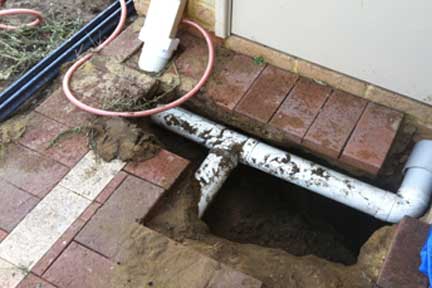
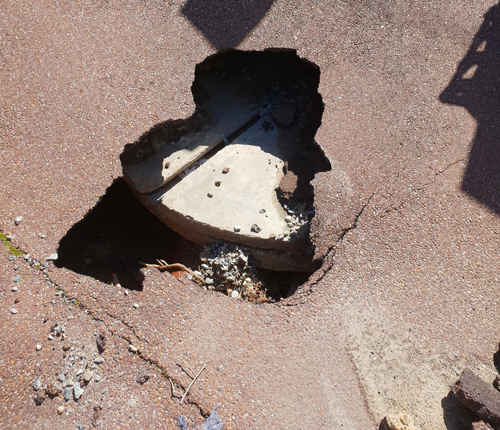
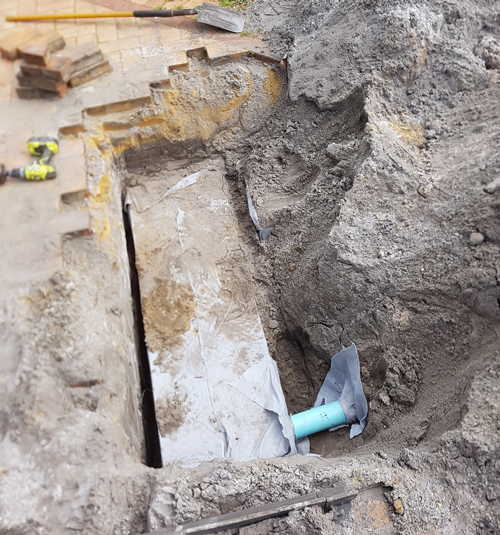
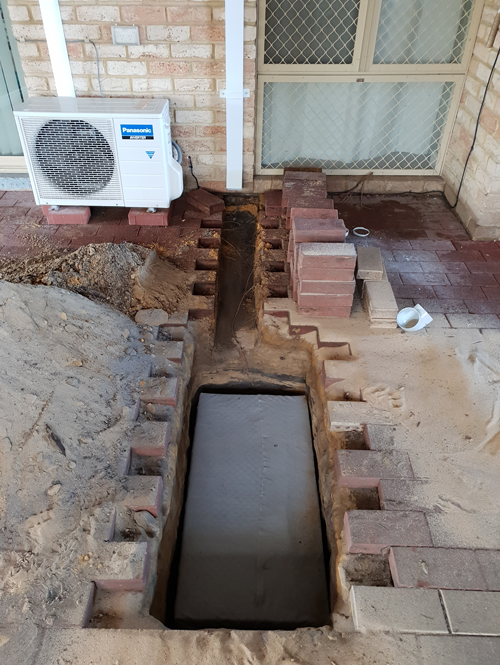
Sinking paving is typically caused by inadequate soakwell volume. When the soakwell fills beyond capacity, water draws sand in between the soakwell and the cover, especially if not wrapped in geofabric or if the inlet wasn't properly sealed. This causes the surrounding paving to sink over time. A proper volume calculation based on your roof catchment area is essential to prevent this issue.
Repair costs vary based on whether you need to supplement existing soakwell volume or install a completely new system. The cost includes volume calculation, excavation, new soakwell installation (if required), proper geofabric wrapping, backfilling, compaction, and paving restoration. We provide free quotes with volume calculations based on your specific catchment area.
It depends on the existing soakwell quality and whether it's interconnected to others. If it's a small plastic 600x600 soakwell from a hardware store, we recommend complete replacement with trafficable polypropylene soakwells. If it's a larger quality soakwell with adequate space, we can add supplementary soakwells interconnected at least 1m away. Starting fresh ensures the problem is permanently solved.
No. Simply repairing the paving without addressing the inadequate soakwell volume will result in the problem recurring. The underlying cause must be fixed first by ensuring proper volume through calculation and either supplementing or replacing the soakwell system. Only then should paving repairs be undertaken.
Prevention requires: 1) Proper volume calculation based on catchment area and council regulations, 2) Quality trafficable soakwells wrapped completely in geofabric, 3) Properly sealed inlets, 4) Adequate compaction during installation, and 5) Using grates under downpipes instead of direct connections to allow the system to breathe. Following these principles results in zero sinking paving issues.
SINKING PAVING AROUND SOAKWELLS? GET YOUR FREE REPAIR QUOTE!
If your paving is sinking around your soakwell it is more than likely an issue with the volume. It is extremely common for soakwells to be installed without any calculation having been performed. The volume of water fills up the soakwell and can draw sand in, between the soakwell and the cover, particulary if not wrapped in geofabric or the inlet was not sealed.
If the volume is not the issue there is likely a hole in the soakwell or a gap between the cover and the soakwell, both issues would be prevented by wrapping the soakwell in geofabric during installation
What's the solution to sinking paving?
The key to preventing this issue is to perform a soakwell volume calculation based on the catchment area. The catchment area is the impervious surfaces (roof or ground area) in m2 that the soakwells will be catering for.
Once you know the volume there are two options, either supplement the existing soakwell or install a new one. Generally if the existing soakwell is a plastic 600 x 600 we will remove it and start fresh.
If the issue is gaps then then they may be fixed by either adding geotextile fabric or mortaring the gaps.
Using grates under downpipes instead of direct connections is recommended as it is critical that the system can breath and any overflow will happen on the ground, not in the roof.
Sinking Paving Summary
Sinking paving is generally caused by inadequete volume.
When the soakwell fills up it draws in sand through the inlet and cover if not sealed (causing the sinking).
The solution is to perform a calculation based on the roof area and council formula to detemine the soakwell volume recommended.
One solution is interconnect a new soakwell to the existing one to make up the volume. Generally this is only done for larger soakwells.
The preferred solution is to remove the old and install a new, trafficable, modular ploypropylene soakwell. These are wrapped in geofabric and totally sealed.
How to prevent sinking paving around a Soakwell ?
There is no point repairing the paving or trying to fix the existing soakwell if the volume is inadequete, the issue will re occur. There are two options to permanantly solve this :
Supplement Existing Soakwell Volume
If there is adequete space and the existing soakwell is good quality then it can be retained. Once the required volume is determined the existing soakwells volume is simply subtracted from the total.
The remaining volume is provided by an interconnected row of modulars soakwells, positioned at least 1m away from the existing soakwell.
Replace with a new Soakwell
Generally a number of modular 140 litre soakwells will be installed with a 1t excavator (720mm wide) as an interconnected line. These are fully trafficable, totally wrapped in geofabric and extremely efficient with a total void area of over 60%. They are perfect for established homes, where space and access is at a premium.
Installing a new soakwell is often preferred for a number of reasons.
If the existing soakwell is interconnected to other soakwells it is impossible to determine the volume provided. Starting fresh ensures no future issues.
If the original soakwell is poor quality, such as a plastic 600 x 600 soakwell from Bunnings, then retaining it simply introduces unnecessary failure points, particularly given the cost of a single polypropylene soakwell.
By starting fresh there can be full confidence that the issue is solved. Following these basic principles results in zero issues with sinking paving.
NEED HELP WITH SINKING PAVING? GET YOUR FREE REPAIR QUOTE!
Sinking paving is generally caused by inadequete volume.
When the soakwell fills up it draws in sand through the inlet and cover if not sealed (causing the sinking).
The solution is to perform a calculation based on the roof area and council formula to detemine the soakwell volume recommended.
One solution is interconnect a new soakwell to the existing one to make up the volume. Generally this is only done for larger soakwells.
The preferred solution is to remove the old and install a new, trafficable, modular ploypropylene soakwell. These are wrapped in geofabric and totally sealed.