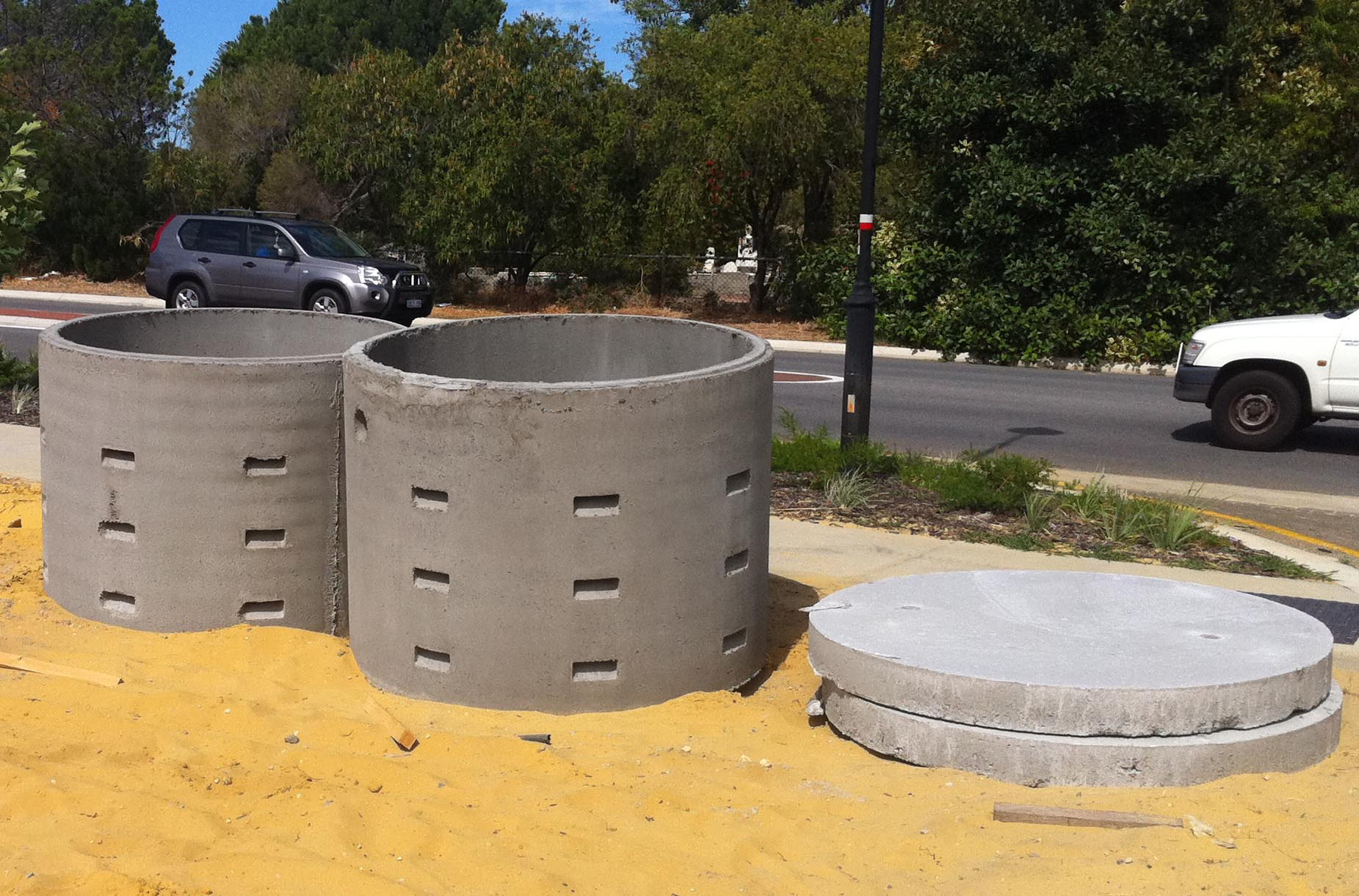
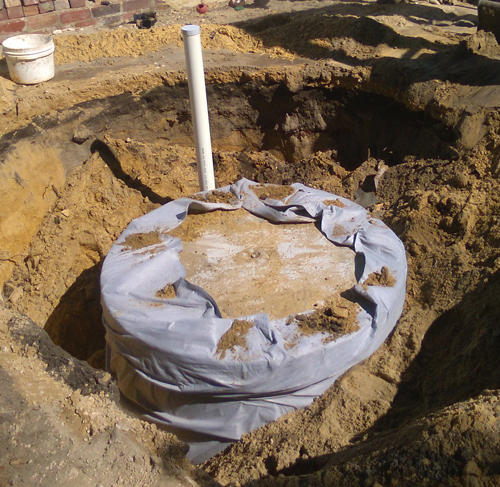
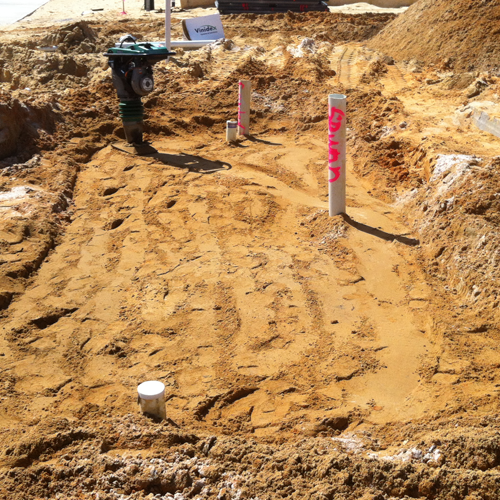
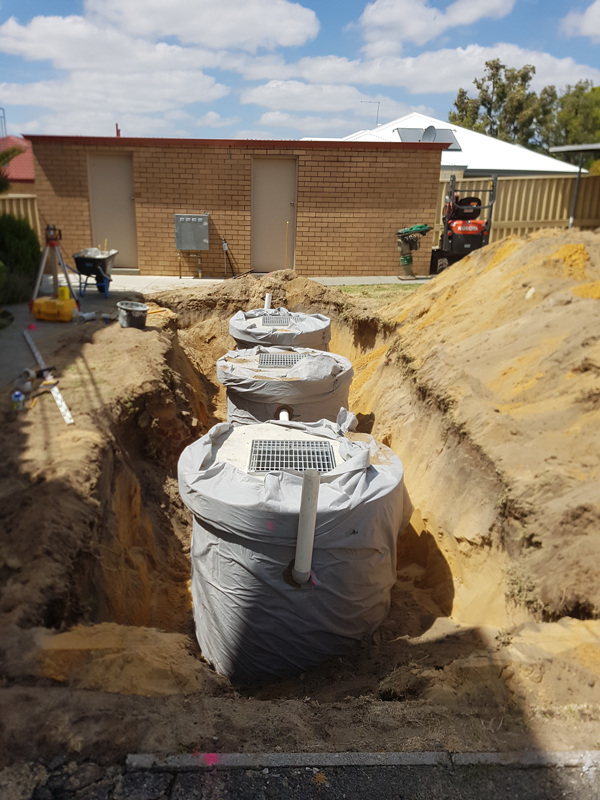
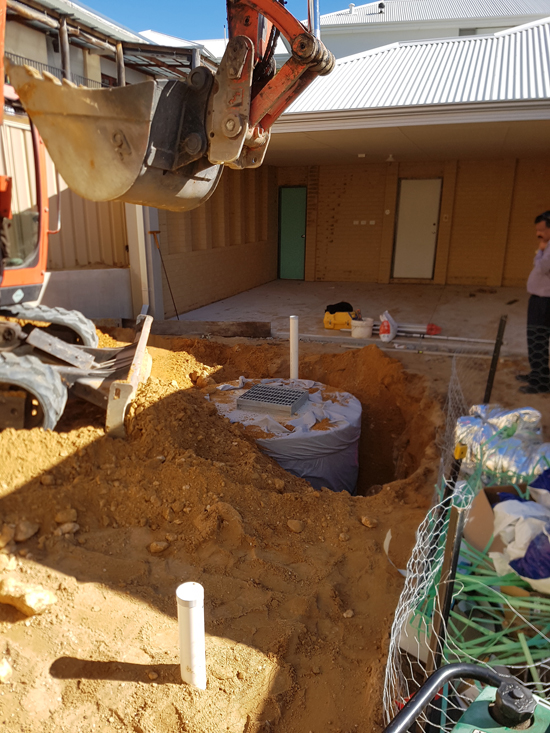
Concrete soakwell installation in Perth typically ranges from $800 to $2,500 depending on the size (1200mm to 1800mm diameter), depth, site access, and number required. Larger concrete soakwells become more cost-effective for catchment areas exceeding 300m². We provide free quotes including stormwater calculations based on your property's specific requirements.
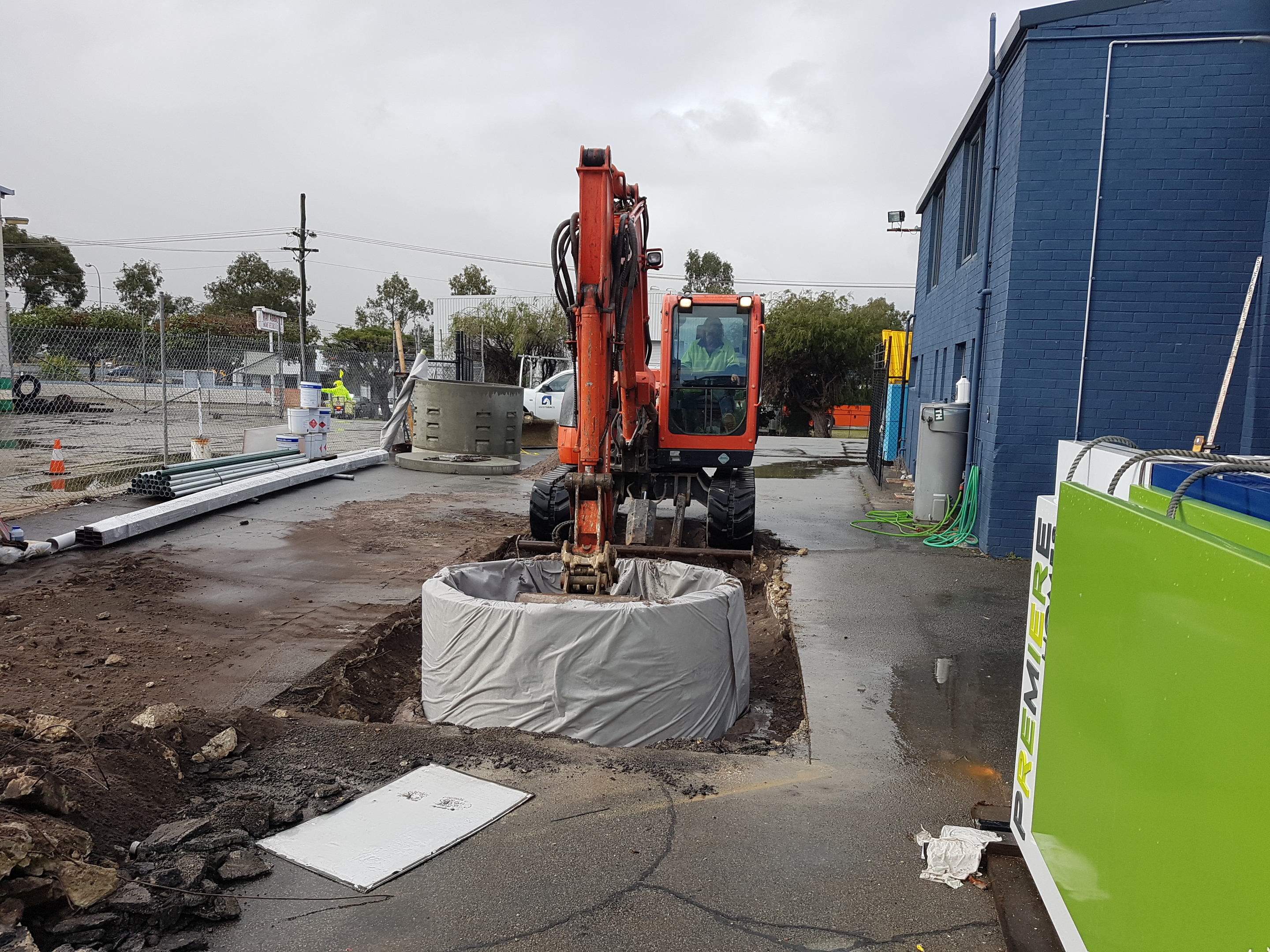
Most residential concrete soakwell installations are completed in 1-2 days. A typical installation with a 9-tonne excavator can place a 1800mm x 1800mm soakwell (4580 litres) relatively quickly. Installation time varies based on soil conditions, number of soakwells, and whether spoil removal is required.
Concrete soakwells are the right choice when: 1) You need surface water collection (driveways, carparks) where grate access is essential for cleaning, or 2) Your catchment area exceeds 300m² and you have good access and available space. A single 1800mm concrete soakwell provides 4580 litres - equivalent to 33 polypropylene soakwells, making it more cost-effective for large volumes.
No, this is a common misconception. Both concrete and polypropylene soakwells have the same trafficable rating (Class C - suitable for normal road traffic). The choice between them should be based on your specific needs: access requirements, volume needed, whether surface drainage is required, and cost considerations.
The safe distance from footings equals the depth of the excavation due to the angle of repose. For example, a 1200mm x 1200mm soakwell requires: 1200mm deep + 150mm cover + 300mm backfill = minimum 1650mm from footings. For 1500mm soakwells, allow at least 1950mm; for 1800mm soakwells, allow at least 2250mm clearance.
The right equipment ensures safe installation: 3.5-tonne excavator for 1200mm soakwells, 5-tonne excavator for 1500mm soakwells, and 9-tonne excavator for 1800mm diameter soakwells. Using appropriately sized equipment is critical for safety and proper installation.
Concrete soakwells have been installed in Perth to council regulations for over 20 years. Servicing both the residential and commercial construction industry and private clients, any project can be accommodated.
Access, volume required, available space and cost will determine the suitability of concrete soakwells for the job at hand. Understanding why soakwells are required helps make informed decisions.
Concrete soakwells are NOT superior to polypropylene soakwells based on construction material alone as they are both trafficable at the same rating. In fact polypropylene soakwells have a larger percentage of void space for equivalent volumes.
When are concrete soakwells the right choice ?
There are two main reasons why concrete soakwells could be preferred over polypropylene soakwells.
Advantages over polypropylene soakwells
Concrete soakwell's can be accessed for cleaning through the grate in the cover. Essential when collecting water from the ground (eg. carparks).
When a catchment area exceeds 300 m2, if there is good access and available space, concrete soakwells become more cost effective to supply and install larger volumes.
EXAMPLE - A 9 tonne excavator can install a 4580 litre, 1800 x 1800 soakwell relatively quickly and easily in a 2m x 2m area. This is equivalent to 33 polypropylene soakwells (at 100% volume), that would take more space, time and money to install.
When performing scheduled soakwell maintenance a machine can easily remove natural material that enters the soakwell, through the grate in the cover. For this reason grated concrete soakwells are preferred over channel drains for driveways and carparks.
Submit plans to determine volume requirements, mark up plans and provide a quote.
Tip! - A common misconception is concrete soakwells are stronger than polypropylene soakwells when in fact they are considered equal for normal road traffic (Class C Trafficable).
SOAKWELL PLACEMENT
When considering the available space remember that while councils may stipulate a minimum distance from footings and boundaries, a safe excavation must consider the angle of repose.
In essence this requires that the safe distance from a footing is the same distance as the depth of the hole.
EXAMPLE:
1200 x 1200 soakwell = 1200mm deep + 150mm thick cover + 300mm backfill to surface = min 1650mm from footings.
Using the right equipment for the job
Using the right size excavator is critical for safety. For each project equipment should be well within the capability of the machines
3.5t excavator for 1200 soakwells,
5t excavator for 1500 soakwells,
9t excavator for 1800 dia soakwells.
Generally polypropylene soakwells are preferred over concrete soakwells smaller than 1200mm, unless being used in a carpark or driveway for surface runoff.
Spoil Removal
The amount of sand left over often comes as a surprise as it is the volume of the soakwells, plus another 40% due to it not being compact.
Spoil removal from site using bobcat and truck is available as part of the service.
All About Soakwells is a Perth based Western Australian business that installs and supplies soakwells and stormwater products for new and established homes.
Drainage for units and driveways, pool backwash systems and spoon drains can also be installed.
PVC soakwells in Perth are not recommended as they are non trafficable, provide inadequate volume and are made obsolete by polypropylene soakwells.
The number of soakwells required to meet council requirements for volume generally means that there is insuffcient space to maintain the required 1.5 - 1.8 metres from any boundary or footing down the sides of most properties.